Use practical questions to check assumptions, expected results, joins, filters, aggregation logic, and downstream interpretation.
SELECT user_id, SUM(amount) AS total_spent
FROM orders
INNER JOIN users ON orders.user_id = users.id
WHERE status = 'Active'
GROUP BY user_id;
-> Hash Aggregate (user_id)
-> Hash Join (orders.user_id = users.id)
-> Filter (users.status = 'Active')
-> Seq Scan on users
-> Seq Scan on orders
How subtle mismatches between business questions and SQL execution plans lead to critical financial and reporting discrepancies.
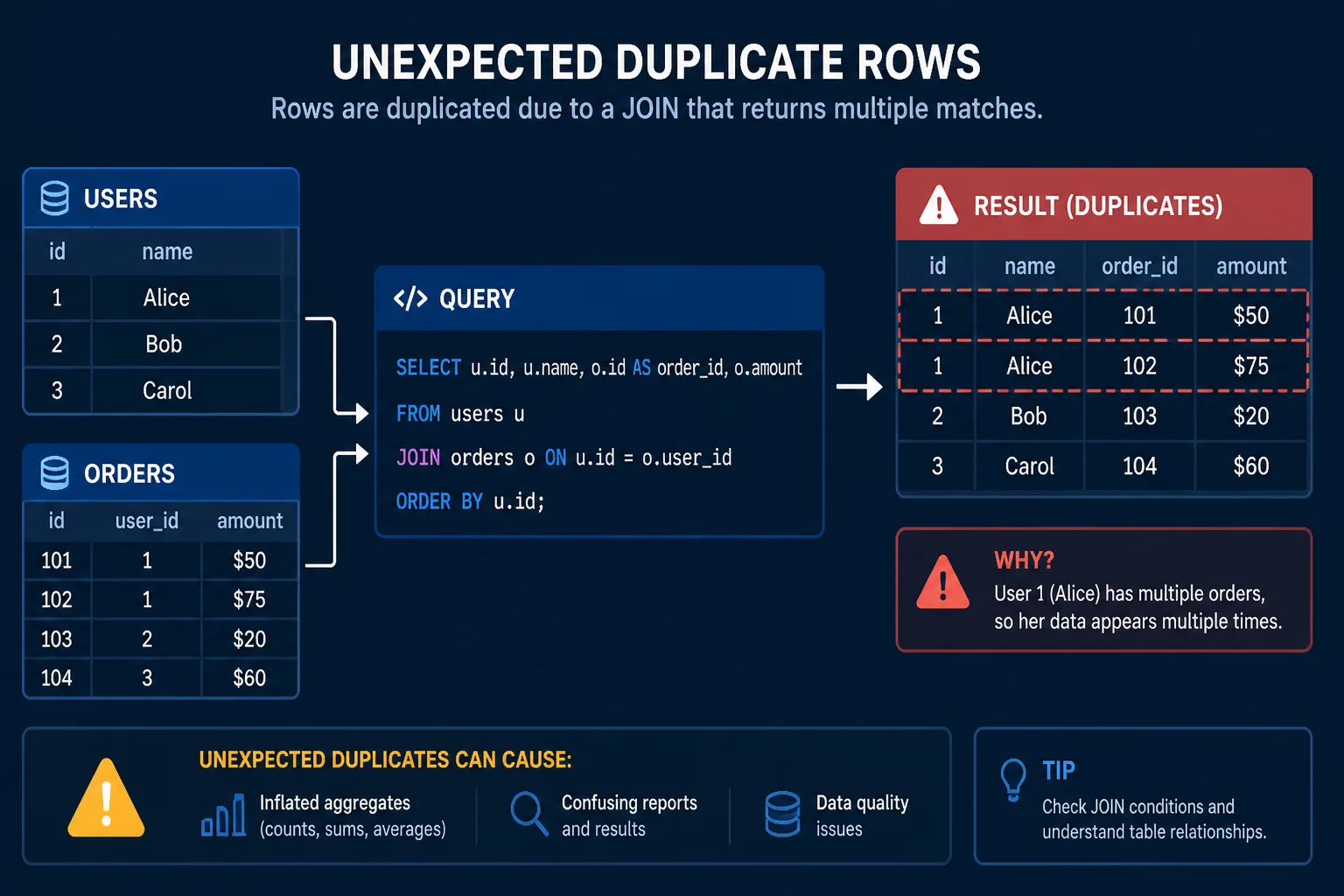
Joining user profiles with multi-valued attributes (like active devices or roles) silently duplicates rows. Aggregating these results without proper distinct counts inflates active user metrics, leading to misallocated marketing budgets.
-- Bad: Inflates user count via device joins
SELECT COUNT(u.id) FROM users u JOIN devices d ON u.id = d.user_id;
-- Good: Preserves user granularity
SELECT COUNT(DISTINCT u.id) FROM users u;
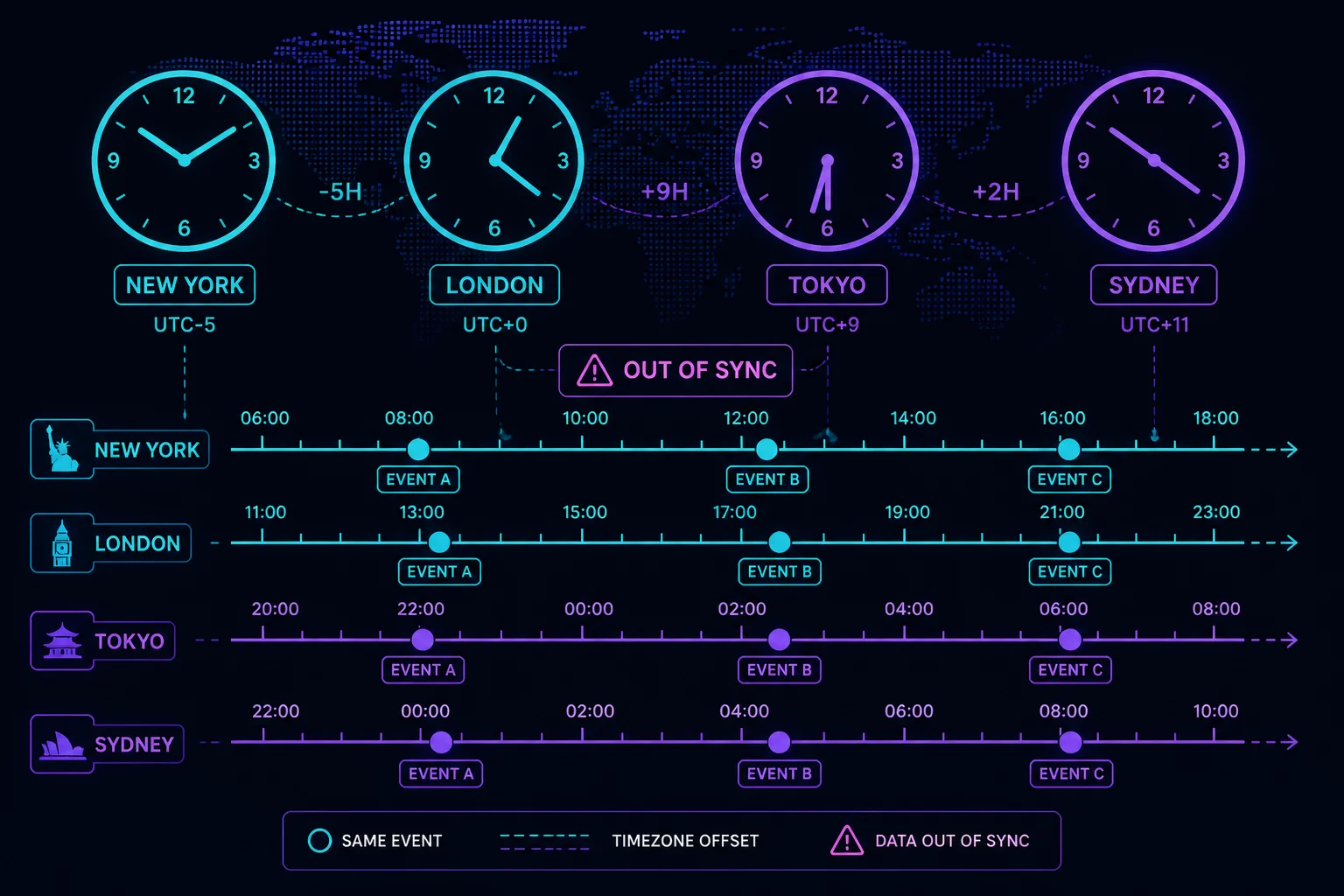
Grouping transactional data by raw UTC timestamps shifts late-evening local transactions into the next day. This creates massive reporting discrepancies between operational dashboards and actual financial close statements.
-- Bad: Ignores local business day context
SELECT DATE(transaction_time), SUM(amount) GROUP BY 1;
-- Good: Standardizes to target timezone
SELECT DATE(transaction_time AT TIME ZONE 'UTC' AT TIME ZONE 'America/New_York'), SUM(amount) GROUP BY 1;
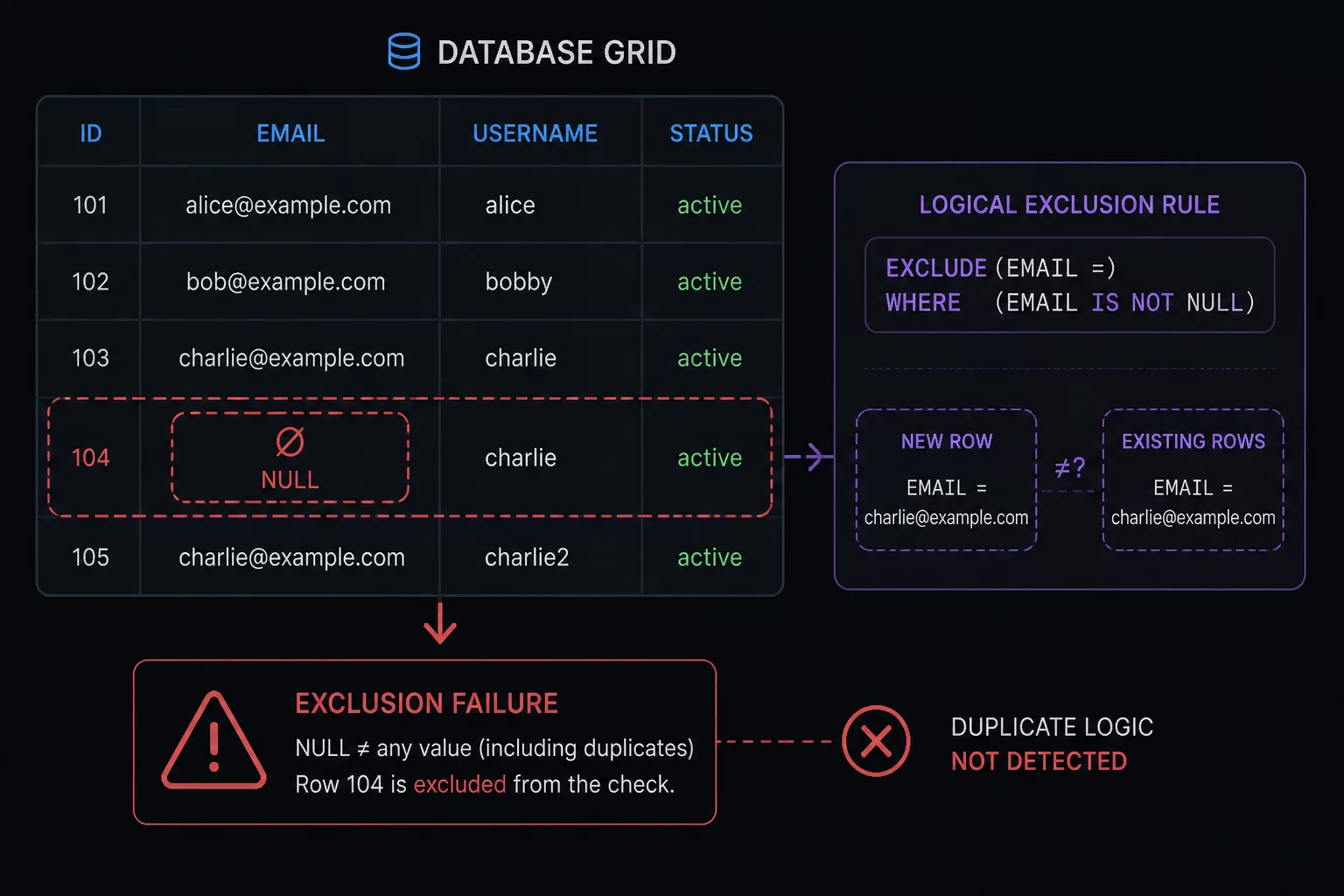
Using a `NOT IN` subquery that yields even a single NULL value causes the entire query to return zero rows. This silent failure leads teams to believe they have zero eligible target customers, completely missing win-back campaigns.
-- Bad: Returns 0 rows if any churned_user_id is NULL
SELECT * FROM users WHERE id NOT IN (SELECT churned_user_id FROM campaigns);
-- Good: Null-resistant matching logic
SELECT * FROM users u WHERE NOT EXISTS (SELECT 1 FROM campaigns c WHERE c.churned_user_id = u.id);
Want to eliminate these mistakes from your team's workflows?

We believe in deep, focused learning. Here is a clear breakdown of what is covered inside the QueryIntent Handbook, and what is intentionally left out.
Deep dives into the logic and interpretation of database results, helping you align SQL execution with business expectations.
Translating ambiguous business requests into precise, logical SQL structures.
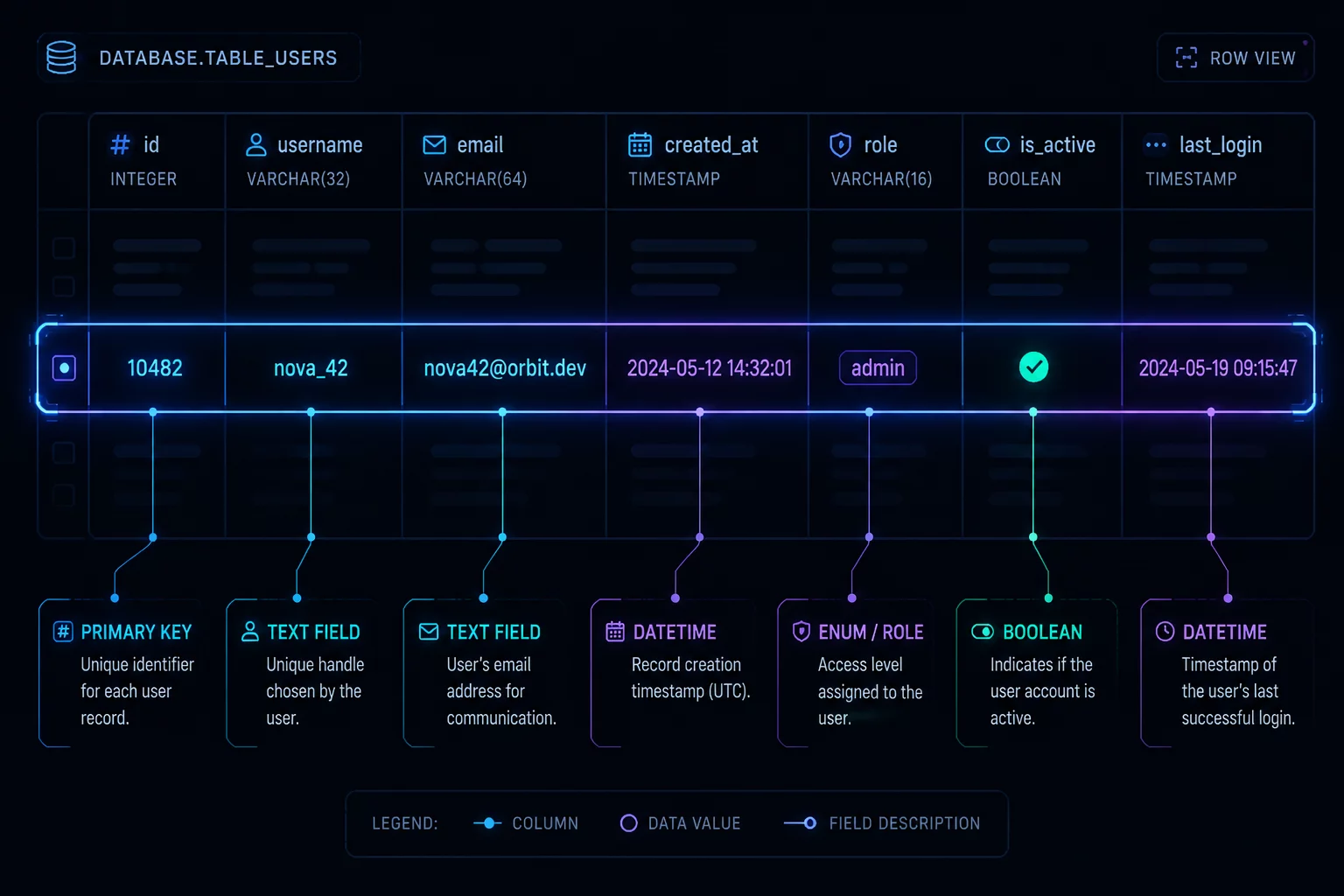
Ensuring you define and verify exactly what one row of the output represents.
Auditing join keys and cardinalities to prevent accidental data duplication.
We skip the basic syntax setup to focus purely on engineering methodologies and interpretation.
We assume you already know basic keywords, syntax rules, and operators.
No guides on installing DBeaver, pgAdmin, or configuring local drivers.
We focus on reviewing, auditing, and correcting query intent, not basic writing.
Going beyond simple syntax validation. We focus on the semantic alignment between business questions and database execution results to prevent silent data failures.
Ensure that your metrics reflect true user actions rather than misaligned table joins. Decisions are only as good as the data intent behind them.
-- Intent: Active last 30d
Catch semantic errors before they reach production reports. Prevent emergency hotfixes and restore trust in your analytics pipelines.
-- Guard: Assert non-nullable
Document the logic flow and row granularity explicitly. Enable seamless collaboration when passing complex analytical queries to other engineers.
-- Granularity: 1 row/user/day
Validate SUM, AVG, and COUNT logic against missing values and nulls. Avoid mathematical skew in financial reports and cohort calculations.
-- Agg: COALESCE(amount, 0)
Prevent many-to-many relationship explosions that silently inflate metrics. Ensure primary keys are verified prior to joining tables.
-- Check: COUNT(DISTINCT id)
Confirm that WHERE conditions do not inadvertently exclude critical cohorts or change the business question mid-execution.
-- Filter: WHERE status = 'A'
Master the seven foundational pillars of SQL query intent analysis to prevent logic errors and ensure accurate data interpretation.
Translate vague business requests into precise analytical logic before writing a single line of SQL.
Establish clear row granularity and set expectations for the dataset's primary unit of analysis.
Validate relationship cardinalities (1:1, 1:N, N:M) and prevent accidental duplication or data loss.
Analyze how WHERE clauses and join conditions alter the population being analyzed.
Detect the root causes of duplicate records and determine whether they represent errors or hidden dimensions.
Ensure SUM, AVG, and COUNT functions align with the expected analytical grain and handle NULLs correctly.
A comprehensive checklist for documenting intent, assumptions, and validation steps for peer review.
Try adjusting your search terms or selecting a different category.
The original query was supposed to show "active customers", but the team had not defined what active means, which period counts as current, whether trial users are included, how multiple accounts should be handled, or whether one row should mean a person or an account.
SELECT COUNT(DISTINCT customer_id)
FROM orders
WHERE status = 'active';
Configuring your options will update this explanation...
Before deploying any query to production, run through these six critical intent-verification questions. Verify your logic, prevent data anomalies, and align results with business expectations.
A query can execute without errors and still answer the wrong question. Map your SQL logic directly back to the initial business request. Ensure the code aligns with the intended business definitions and boundaries.
-- Incorrect: Returns all orders
SELECT user_id, amount FROM orders;
-- Correct: Aligns with business intent
SELECT user_id, amount FROM orders
WHERE status = 'completed'
AND test_account = FALSE;
Define the exact granularity of the result set before writing code. If a row represents one transaction, ensure there are no aggregations that collapse rows, and no joins that duplicate them.
-- Defines row as: User per Day
SELECT
user_id,
DATE(created_at) AS active_date,
COUNT(id) AS action_count
FROM user_actions
GROUP BY 1, 2;
Document all assumptions made in your WHERE clauses. Hardcoded status values, date offsets, or country codes can exclude valid records silently as the system evolves.
-- Dangerous: assumes status is static
WHERE status IN ('active', 'pending')
-- Safer: explicit exclusion of dead states
WHERE status <> 'deleted'
AND status IS NOT NULL;
A one-to-many or many-to-many join relationship can silently duplicate rows, artificially inflating sums, counts, and financial reporting metrics.
-- Safe: Aggregating before joining
WITH aggregated_items AS (
SELECT order_id, SUM(price) AS total_price
FROM order_items GROUP BY 1
)
SELECT o.id, i.total_price
FROM orders o
JOIN aggregated_items i ON o.id = i.order_id;
Evaluate whether NULL represents missing data, an inactive state, or an error. Use explicit handling rules to ensure aggregate functions do not skip critical records.
-- Dangerous: NULL metrics are ignored
SELECT AVG(score) FROM feedback;
-- Safe: Explicit interpretation of NULL
SELECT AVG(COALESCE(score, 0))
FROM feedback;
Provide a peer review guideline. Highlight complex CTEs, non-standard joins, and date offset assumptions so that subsequent reviewers can focus on the riskiest logic sections.
-- Reviewer Note:
-- 1. Verify timezone conversion on line 12
-- 2. Confirm outer join behavior with
-- historical CRM data partitions
Master the art of translating business logic into precise SQL execution outcomes with our foundational guides.
Introduction to the concept of query intent and why it matters more than syntax.
Read GuideHow to translate a vague business request into a precise analytical question.
Read GuideEstablishing row granularity before writing any joins or aggregations.
Read GuideReviewing the assumptions made when joining multiple source tables.
Read GuideTry searching for other terms or reset the filter.
Explore real-world scenarios where subtle SQL query intent mismatches led to critical downstream data misinterpretations.
Analyzing a query where 'active' was poorly defined, leading to skewed user metrics and wrong business conclusions.
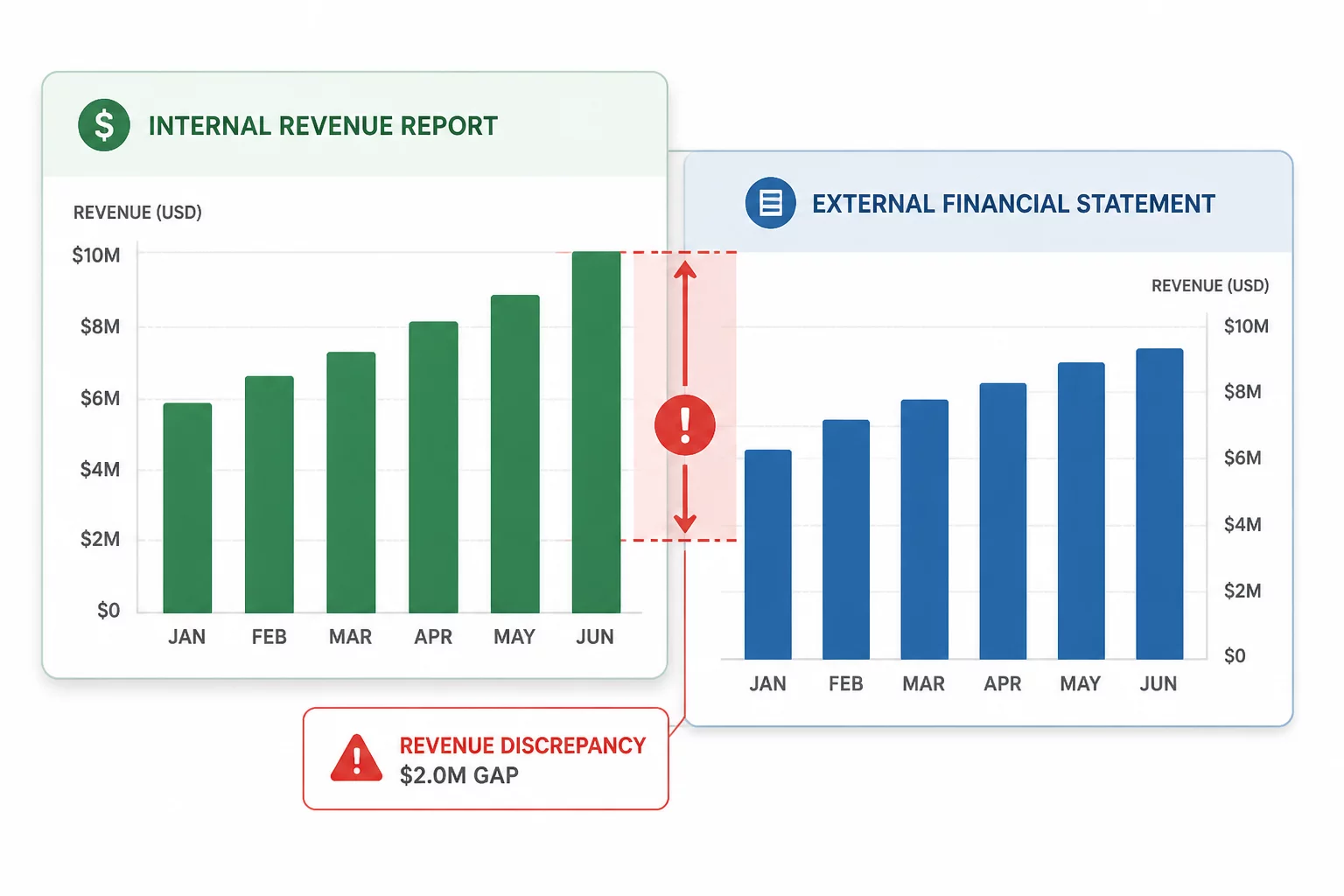
Investigating a critical revenue report discrepancy caused by incorrect row meaning and aggregation levels.
A case where duplicated orders inflated the final aggregation due to a bad join logic and lack of distinct keys.
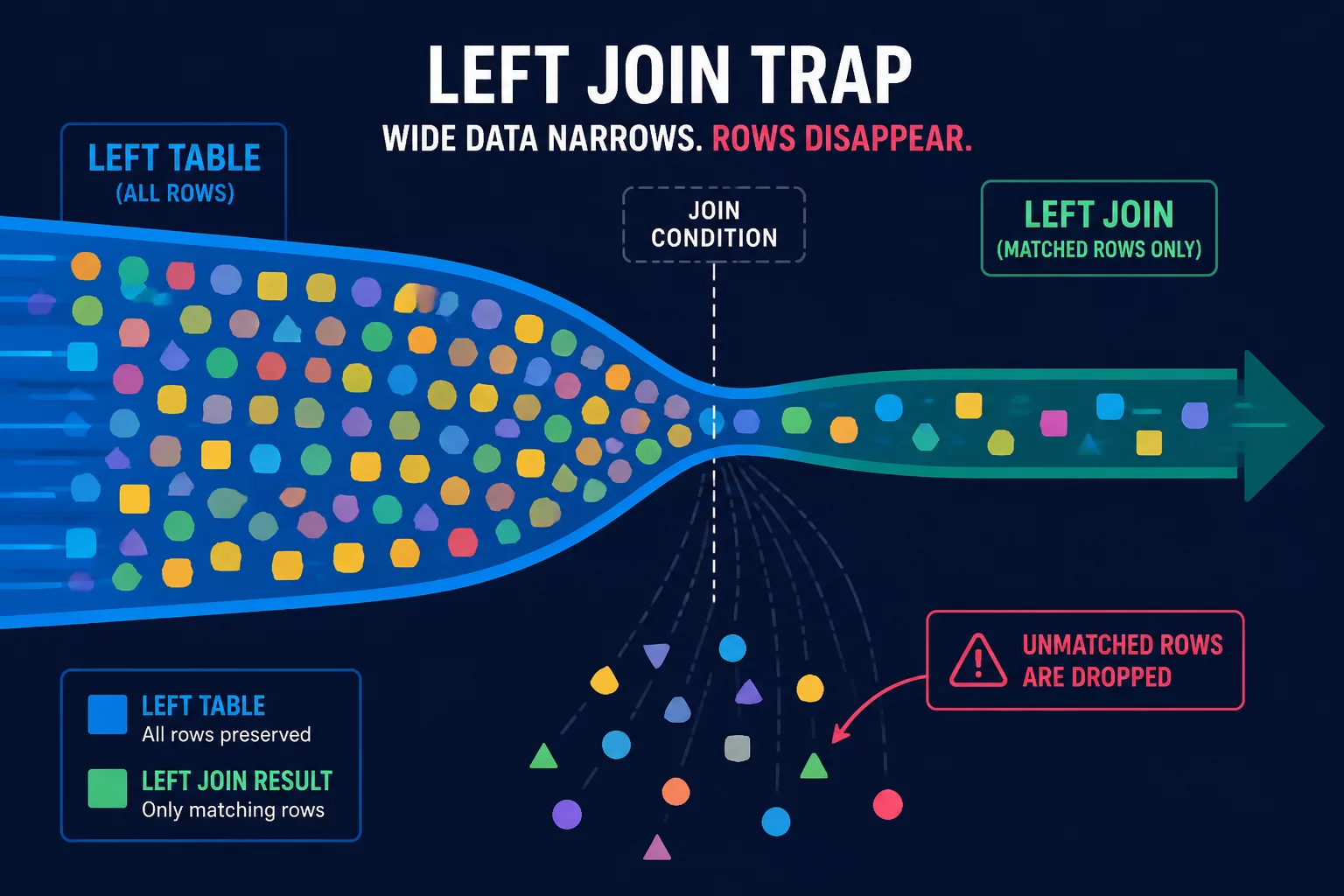
Exploring the 'Left Join Trap' where intended filtering is accidentally bypassed due to WHERE clause placement.
Try adjusting your search query or filter tabs.
QueryIntent Handbook is an independent database-engineering publication about query reasoning and result interpretation. It does not provide a database client, execute SQL, connect to databases, process credentials, or modify data. DBeaver is a trademark of its respective owners. QueryIntent Handbook is not affiliated with or endorsed by DBeaver.